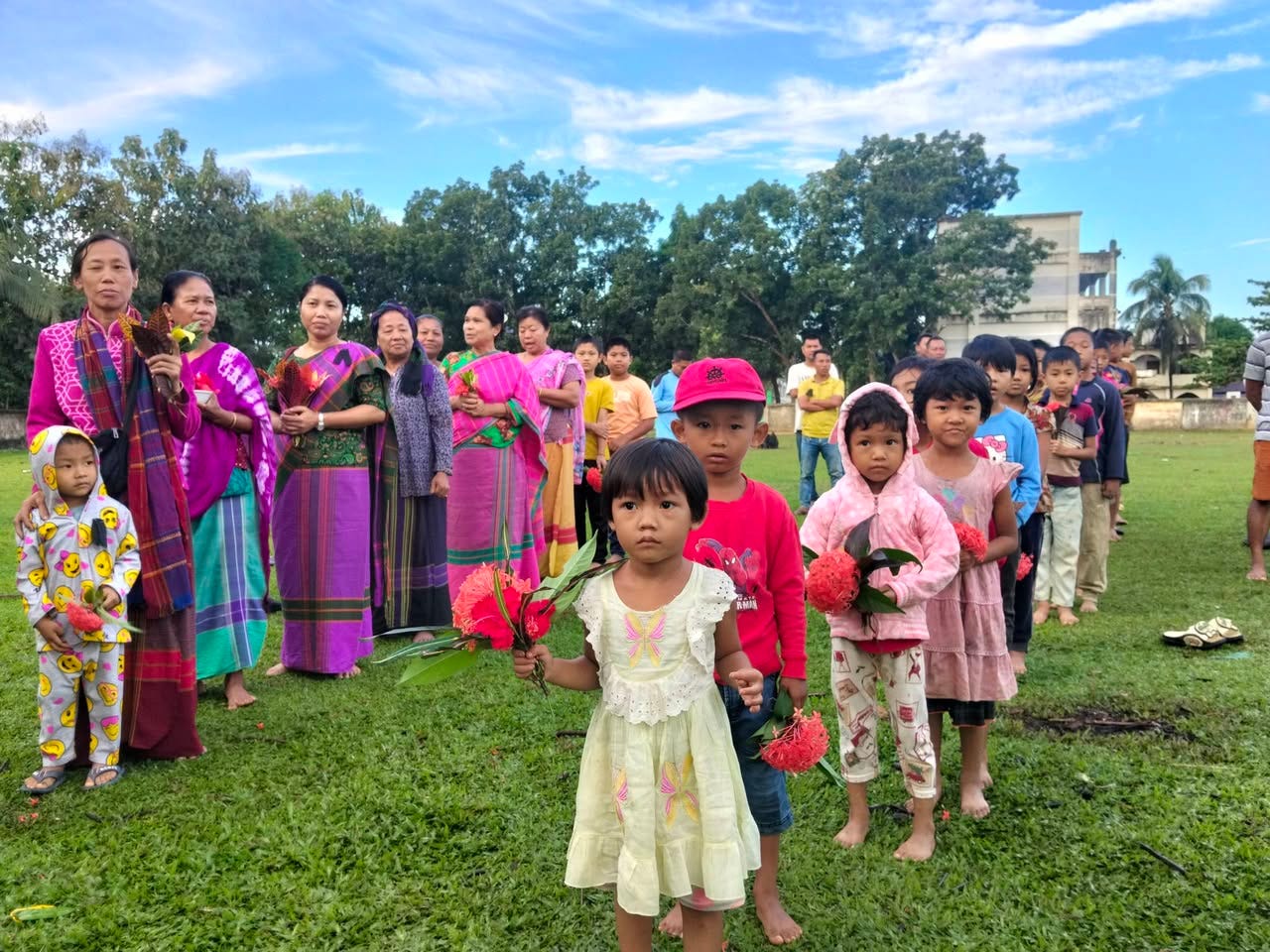
Across the Chittagong Hill Tracts, Indigenous Jumma communities came together on November 10, 2026, to commemorate the 43rd martyrdom anniversary of revolutionary leader Manabendra Narayan Larma, widely known as M. N. Larma.
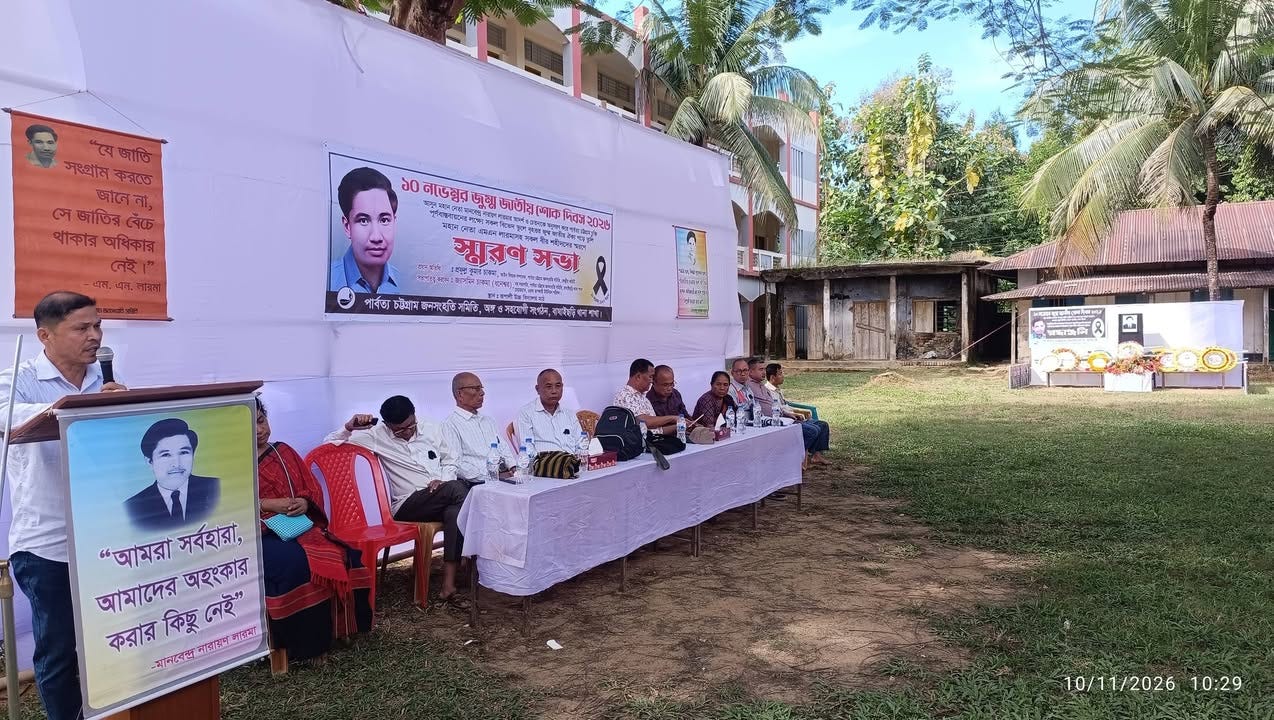
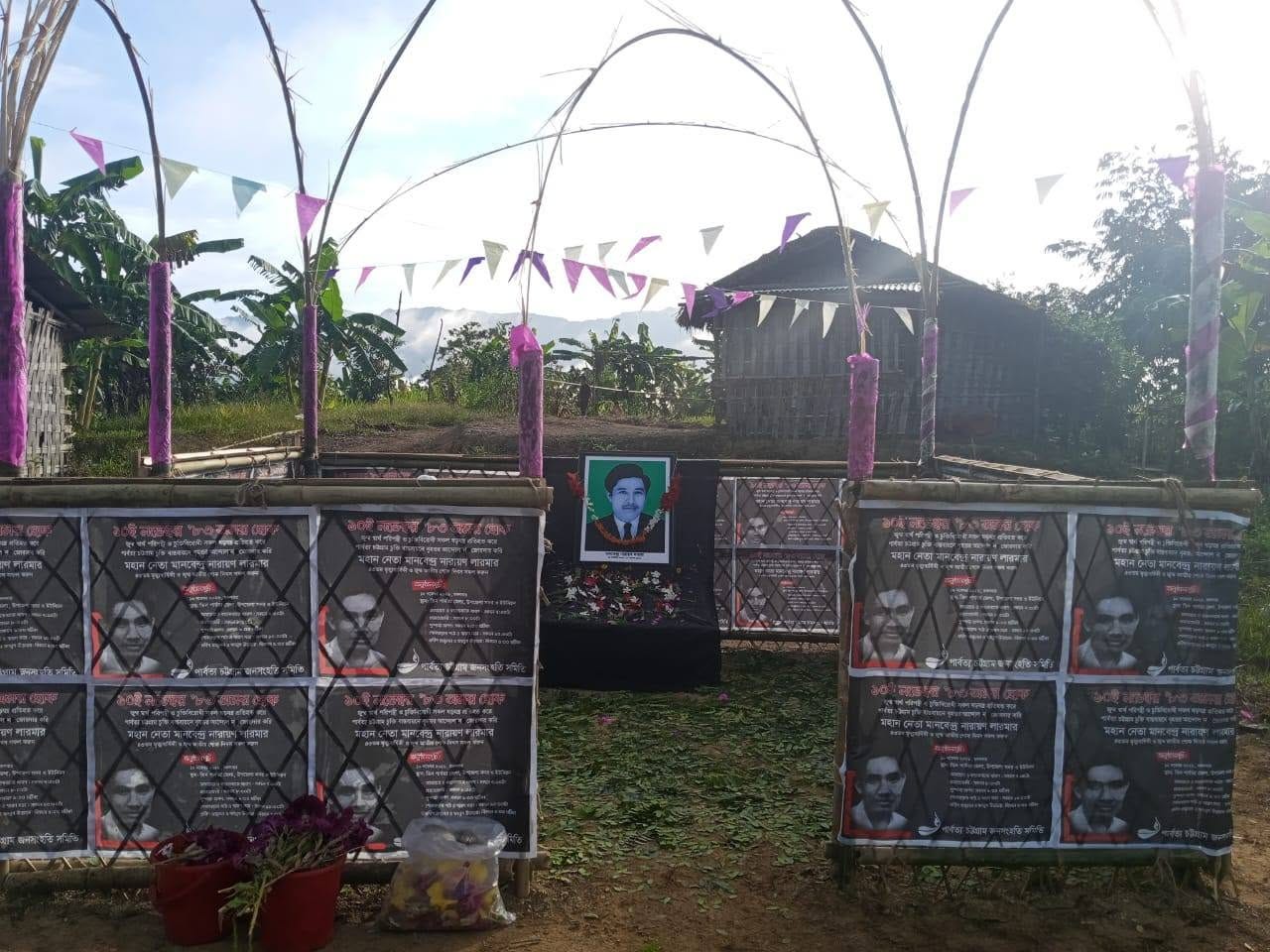
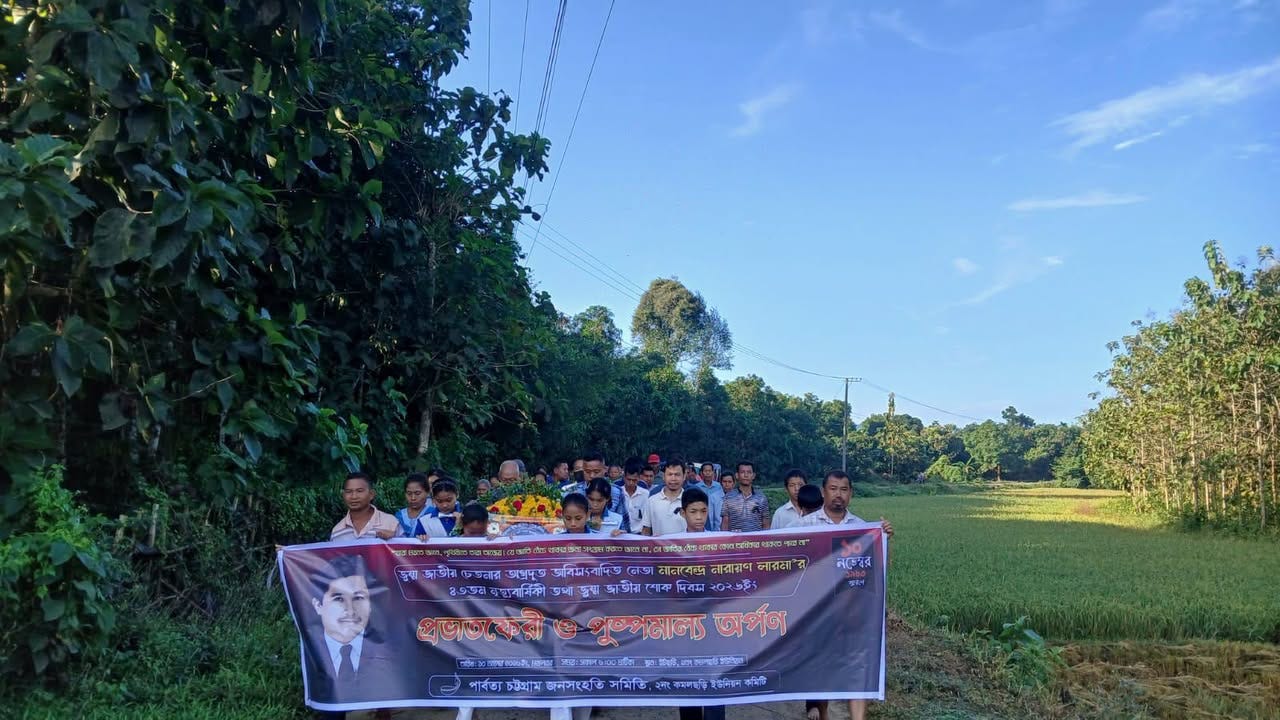
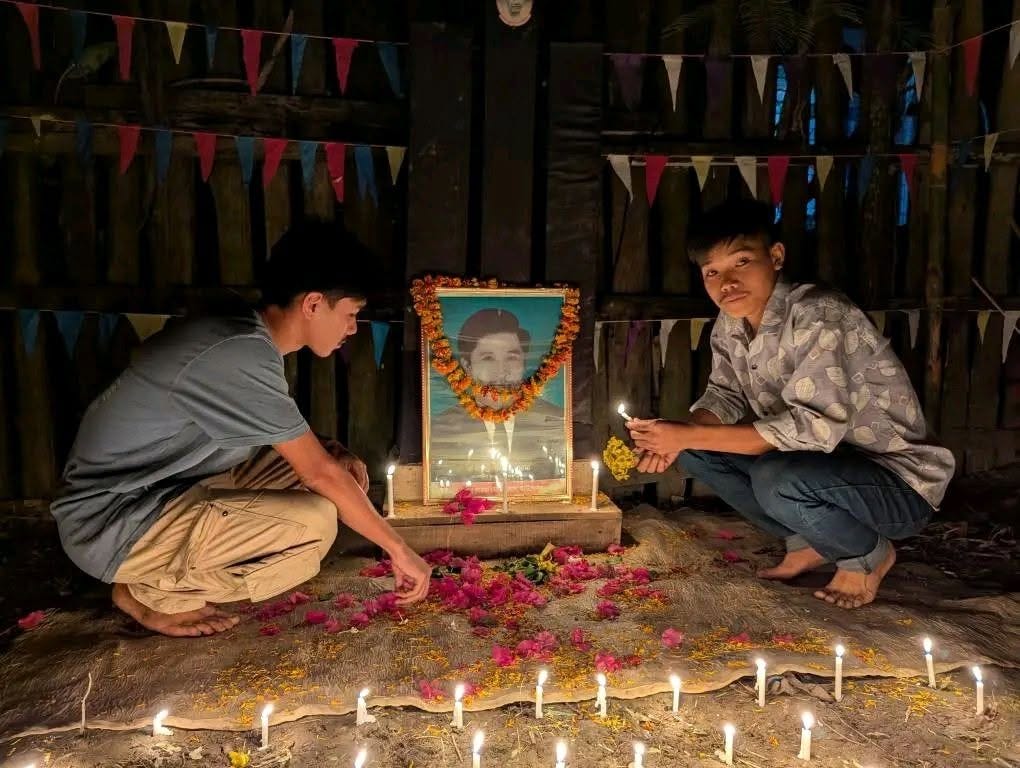
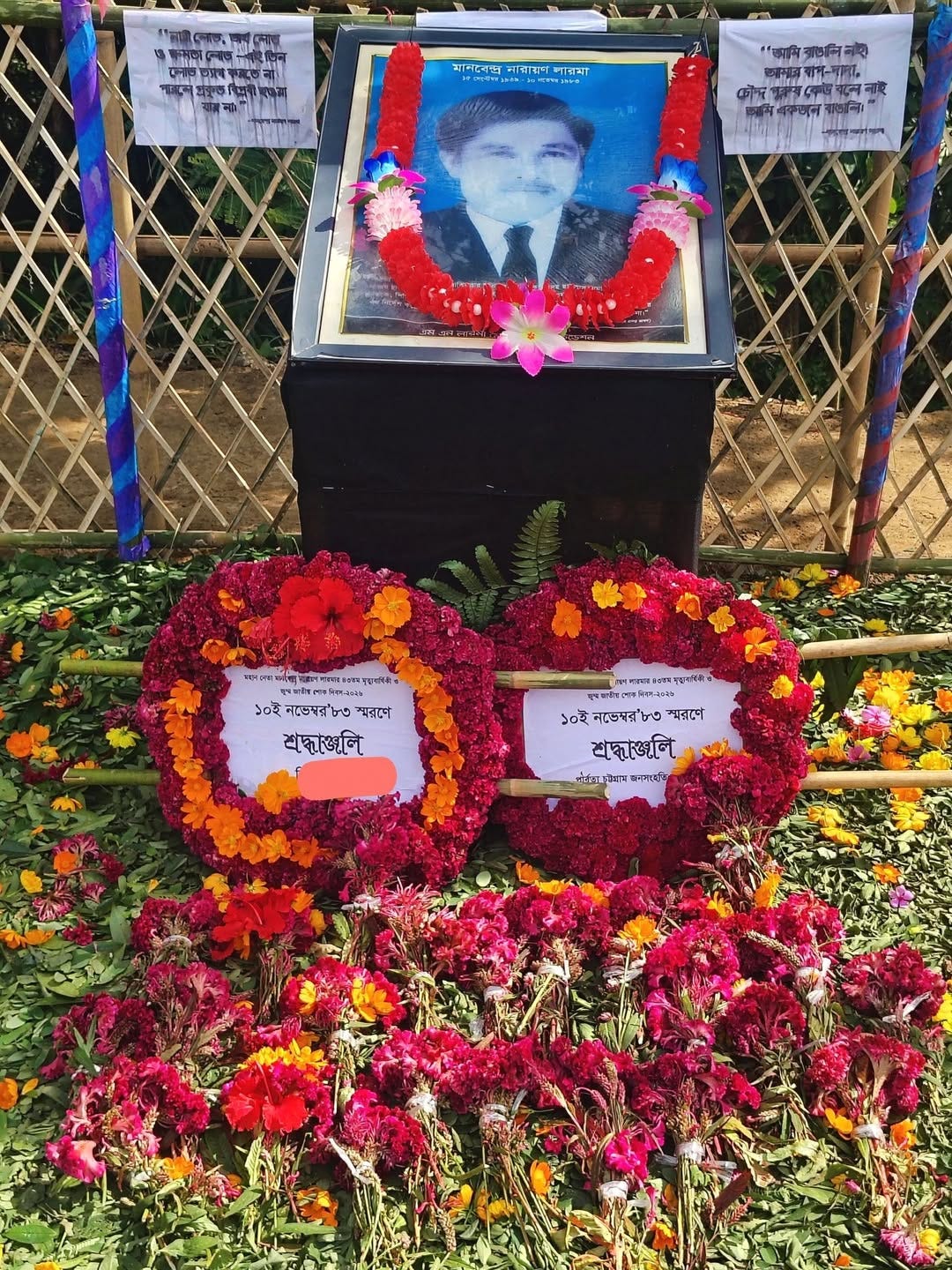
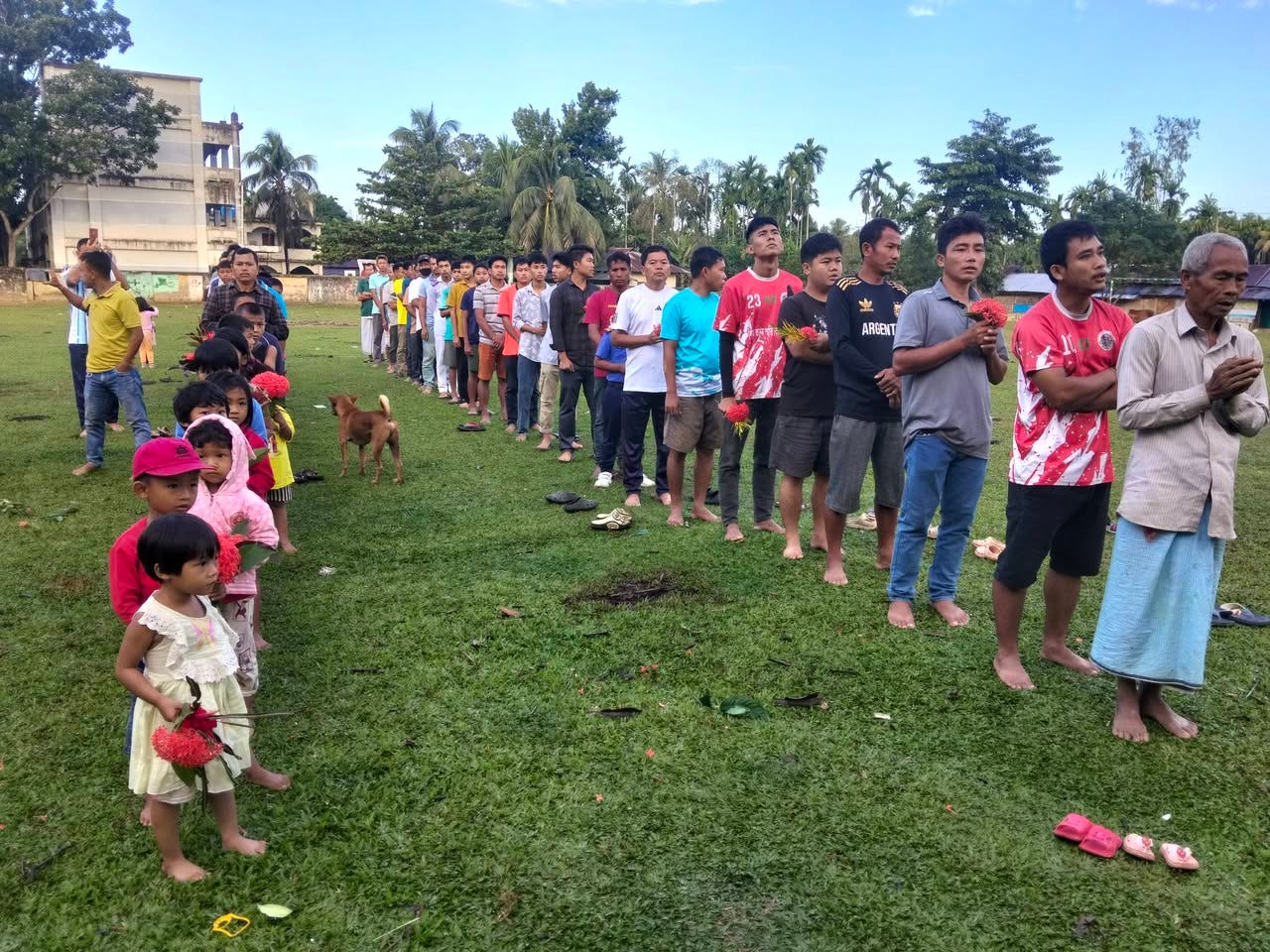
From village gatherings in Sajek to remembrance ceremonies in Baghaichhari, Rangamati and Bandarban, the day was marked by floral tributes, moments of silence and discussions reflecting on his life, political struggle and contributions to the Jumma people.
November 10 holds a special place in the history of the Chittagong Hill Tracts. On this day in 1983, M. N. Larma and eight of his comrades were killed in an armed attack by a dissident faction of the Parbatya Chattagram Jana Samhati Samiti (PCJSS) in Panchhari, Khagrachhari.
Larma was among the first political leaders to challenge the denial of the distinct ethnic identities of the Indigenous peoples of the Chittagong Hill Tracts. As a member of Bangladesh’s Constituent Assembly and later its first Parliament, he advocated recognition, political representation and equal rights for the Jumma communities.
He founded the PCJSS in 1972, laying the foundation for an organised political movement centred on the rights, identity and self-determination of the Indigenous peoples of the region.
More than four decades after his death, his political legacy remains closely connected to contemporary discussions about land rights, autonomy, cultural identity and the implementation of the 1997 Chittagong Hill Tracts Accord.
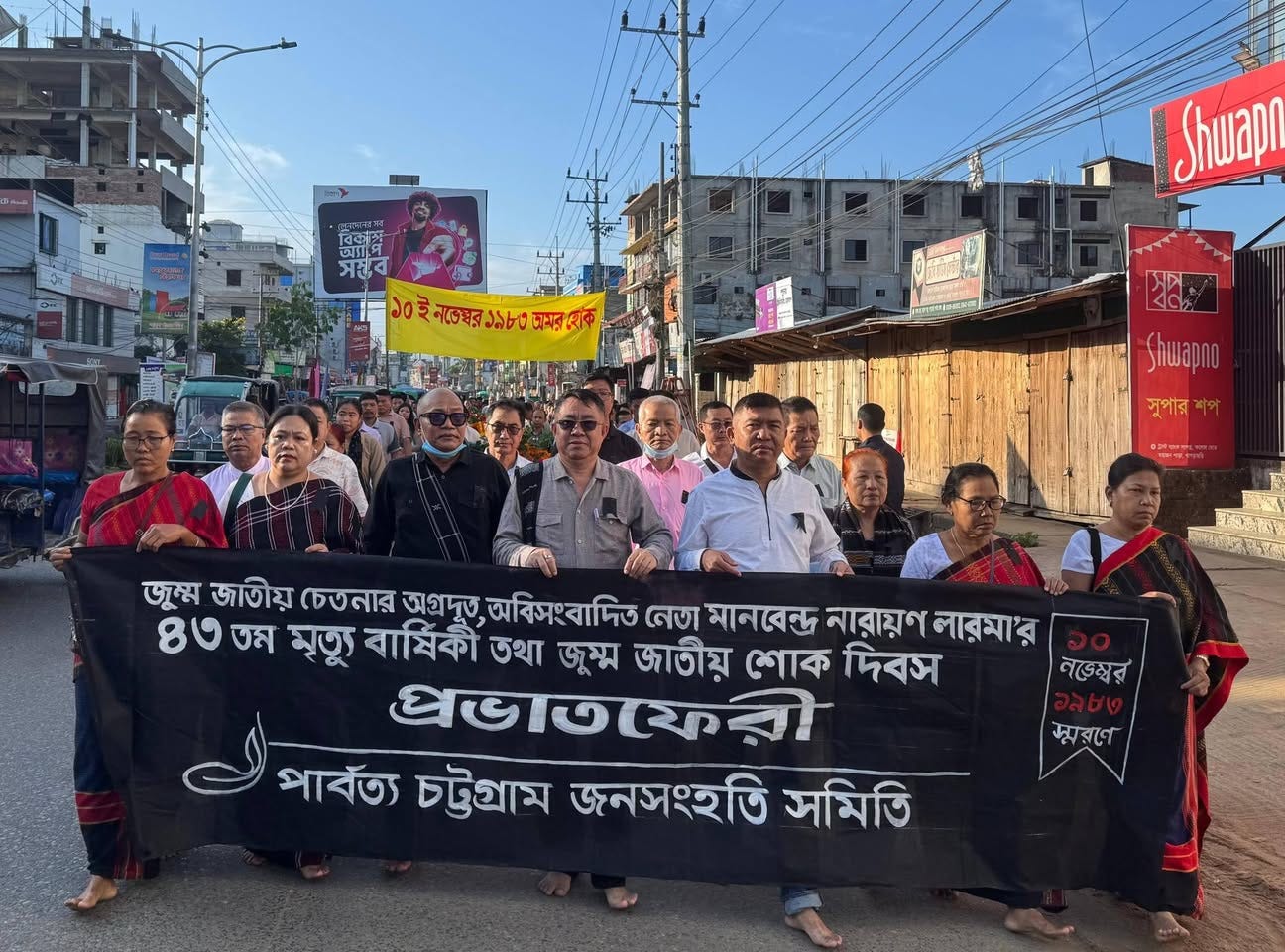
This year’s remembrance programmes took place across different parts of the hill districts and beyond. In Rangamati, participants gathered to pay floral tributes and attend memorial discussions. Similar programmes were held in other areas, bringing together community representatives, students and residents.
At a memorial meeting in Rangamati, PCJSS Vice-President Ushatan Talukder renewed the organisation’s call for full implementation of the CHT Accord and the protection of Jumma rights.
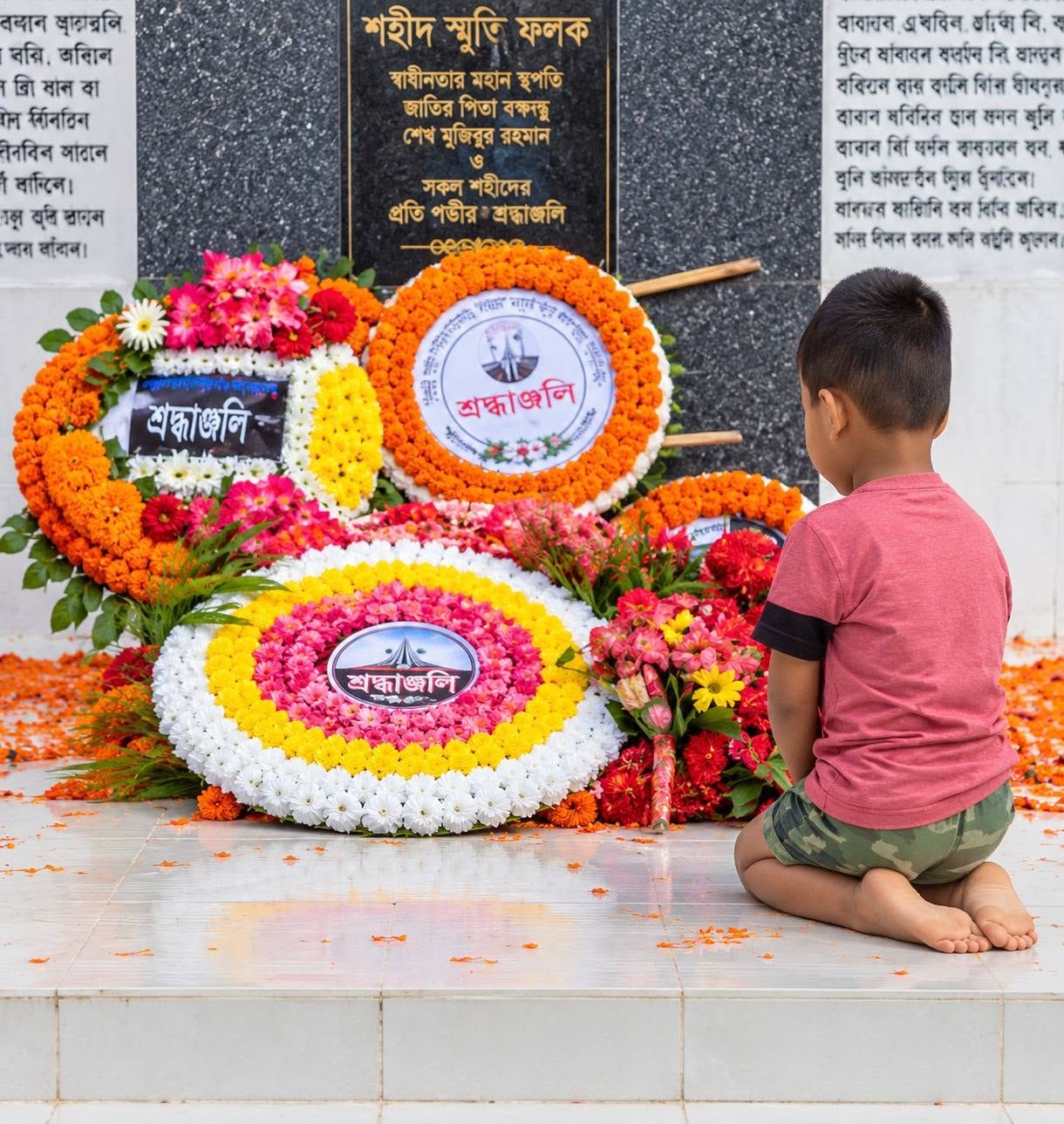
The photographs collected from different locations offer a glimpse of how communities remembered Larma on the 43rd anniversary of his death.
Some ceremonies were organised by local residents, while others were held at educational institutions, community gathering places and memorial sites.
Together, these images show how the remembrance of November 10 extends beyond major political gatherings and remains part of community life across the hills.
For many Jumma people, the day is both a time of mourning and an opportunity to reflect on the political questions that shaped Larma’s life.
His death in 1983 did not end those questions. The recognition of Indigenous identity, protection of ancestral land and implementation of the CHT Accord continue to feature in discussions about the region’s future.
The following photographs capture moments from the 43rd anniversary commemorations, as shared by photographers, residents and organisations across the Chittagong Hill Tracts.