

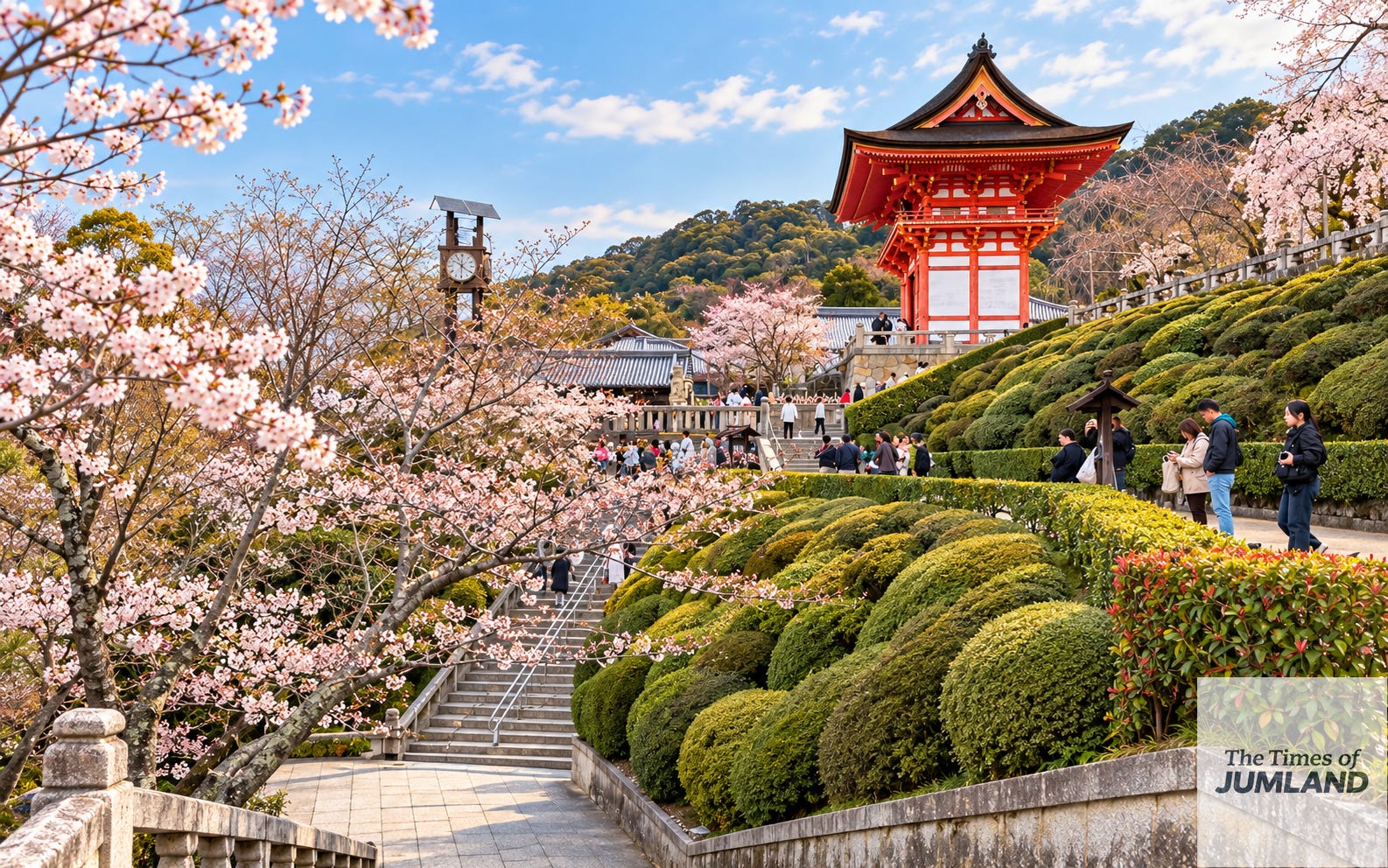
A country can become so admired that its success begins to threaten the qualities people came to admire. Japan, now celebrating another international tourism victory, should take that possibility seriously.
On October 6, Japan was ranked the world’s best country to visit for the fourth consecutive year in the American edition of Condé Nast Traveler’s 2026 Readers’ Choice Awards. Italy followed, then Ireland, Cambodia and Spain. The British edition placed Greece first and Japan second. These are readers’ preferences, not an official verdict on which country is objectively “best,” but Japan’s consistency is striking.
It is also understandable. Japan combines things that rarely coexist so comfortably: ancient shrines and high-speed trains, mountain villages and vast modern cities, seasonal beauty and extraordinary everyday convenience. The attraction is not limited to cherry blossoms, sushi or Mount Fuji. For many visitors, it is the feeling that daily life works.
Trains usually arrive when expected. Public spaces are generally well maintained. People tend to respect queues, keep noise down in shared spaces and take care not to inconvenience strangers. These habits are sometimes presented as charming details of Japanese culture. They are more than that. They help make a densely populated society livable.
Living in Japan changes how one sees the praise. The order tourists admire is not a performance staged for their arrival. It exists because residents, public employees and businesses sustain it every day. A clean station requires constant work. Reliable transport requires investment and discipline. Courtesy depends on people accepting obligations to those around them.
That is why Japan’s tourism success deserves celebration—and scrutiny.
Japan welcomed a record number of international visitors in 2025, and its government is aiming for 60 million annually by 2030. Tourism supports hotels, restaurants, shops, transport operators and regional economies. For communities struggling with population decline, more visitors can mean jobs and renewed interest in local traditions. It would be a mistake to treat this economic opportunity as a problem in itself.
Yet numbers alone do not measure success. Kyoto provides a warning. In a 2025 city survey, 79.9 percent of responding residents said they were troubled by at least one of four problems associated with tourism, including crowded transport, congestion around tourist areas, traffic or poor visitor manners. That figure does not mean Kyoto residents oppose tourism. It means the benefits and burdens of popularity are not distributed equally.
Consider a bus in Kyoto. For a visitor, it is a convenient way to reach a temple. For a resident, it may be the only practical way to get to work, school or a medical appointment. Both have legitimate reasons to travel, but one person’s holiday should not routinely make another person’s ordinary life more difficult.
The same applies to historic streets. Visitors see beautiful architecture and a perfect backdrop for photographs. Residents see their neighborhoods, doorways and daily routines. A place does not stop being someone’s home because it becomes famous online.
Some commentators frame the tension as Japan versus foreign tourists. That is too simplistic. Many visitors behave respectfully, while tourism pressures also involve infrastructure, planning and the concentration of attractions in a few districts. Blaming outsiders is easier than managing a fast-growing industry, but it solves little.
There are better choices. Japan can encourage longer visits rather than simply chase higher arrivals. It can make less-visited regions more accessible without turning them into replicas of Kyoto. Local communities should have a meaningful voice in deciding which kinds of tourism they welcome and what limits are necessary. Revenue from tourism should visibly improve the places that absorb its costs.
Japan’s own tourism strategy recognizes the need to protect residents’ quality of life while drawing visitors beyond the most crowded destinations. Turning that principle into daily reality will be harder than announcing a target.
Perhaps the greatest risk is misunderstanding what made Japan attractive in the first place. Its global appeal did not begin with a marketing campaign. It grew from institutions, traditions, public trust and countless ordinary acts of consideration. Those things are difficult to build and surprisingly easy to erode.
The country has proved it can win the admiration of travelers. The next test is whether it can welcome more of them without asking residents to sacrifice the calm, dignity and convenience that make Japan worth visiting.
Japan should remain a wonderful place to discover. It must remain, first, a wonderful place to live.
Sources:
Japan National Tourism Organization — 2026 Readers’ Choice Awards
Kyoto City — 2025 Residents’ Tourism Survey
Japan Tourism Agency — Tourism Promotion Plan 2026–2030
Tokyo Tourists - Kyoto Kiyomizu-dera Temple: A Visitor’s Guide