

Uthowaingya Marma contacted me with a simple request: could someone donate a bag of rice? It would cost Tk 2,500. He explained that one bag would cover a child’s rice for a year, eaten twice daily. Vegetables, lentils, fish, eggs and everything else would cost extra. This was only the rice.
What stayed with me was the relief he said it would bring. That contribution would mean one child’s rice was secured for the coming year. Among all the expenses he had to meet, one essential need would be covered. By then, he had already sold part of the property inherited from his father to keep children fed and learning.
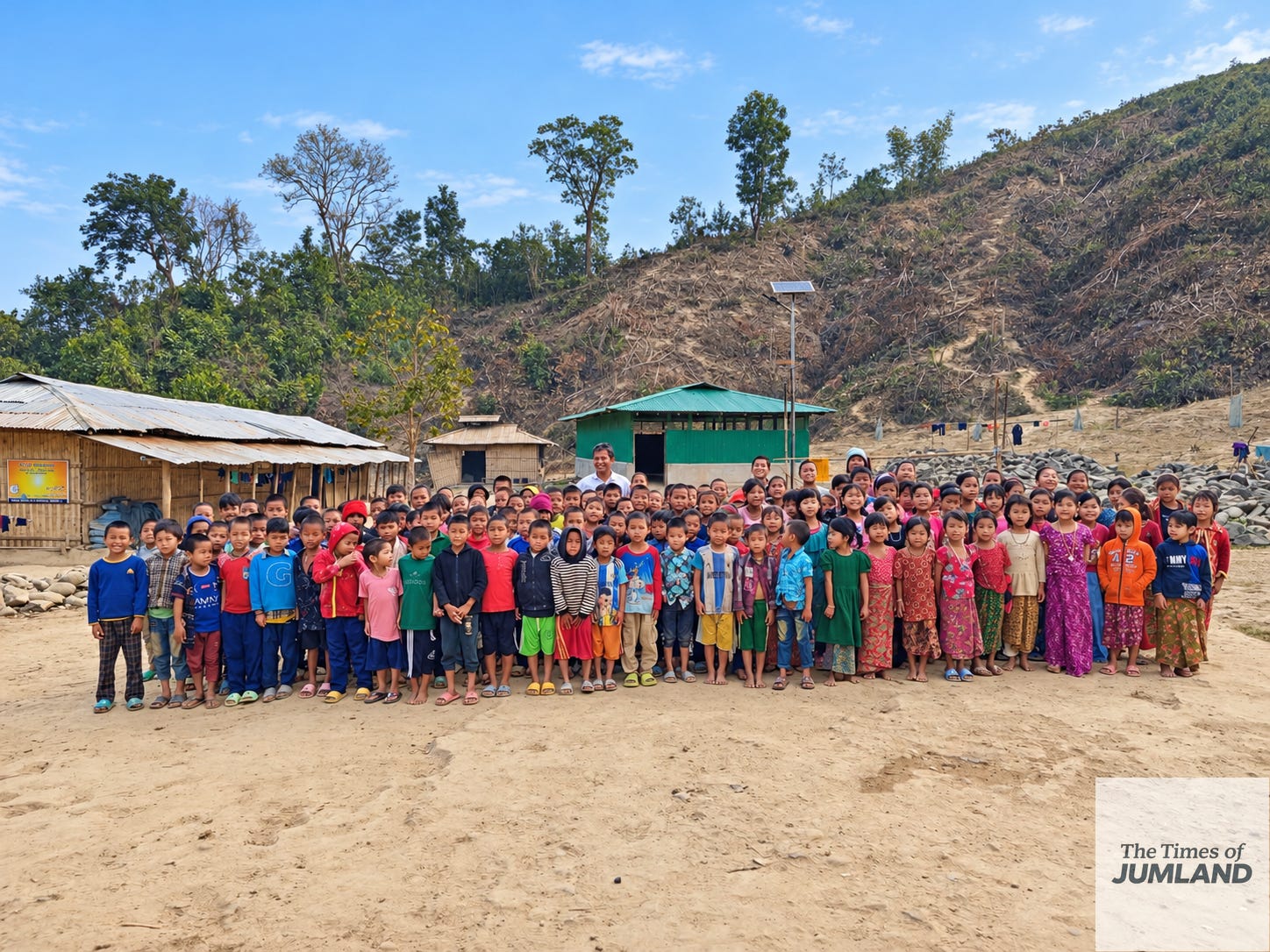
Around 260 children depend on the two institutions he established in Bandarban, in Bangladesh’s Chittagong Hill Tracts. Many come from poor families in remote villages, where there is no school within practical reach. For them, education depends on having somewhere away from home to sleep, eat and receive care.
Reaching a classroom can require travelling long distances along steep hill paths. A young child cannot always make that journey and return home safely every day. Moving closer to a school brings another obstacle: someone must pay for accommodation, meals, books and clothing.
Many parents depend on jhum cultivation and struggle to meet everyday household needs. They want their children to study, but maintaining a child in a town can cost more than they can afford. The distance between home and school becomes a distance between the future they hope for and the life their circumstances allow.
Some children are orphans. Others have families who contribute whatever they can, although even modest payments can be difficult to maintain. Uthowaingya has spent years trying to ensure that these hardships do not bring their education to an end.
In 2015, he worked with local young people to establish a hostel beside Lama Sadar Buddhist monastery. That initiative eventually closed after difficulties and local opposition. Around 2017, he tried again in Kalajhiri, but difficult access made regular supervision hard. That effort also ended.
After those setbacks, he began again beside his own home in Lama. Rongkhredoh Shishu Sadan started with nine children. Today, it accommodates around 120 students, with four teachers supporting their education. What began as a small undertaking has become a home and a route into schooling for many more children.
His second institution, Preinnoi Shikshaloy, serves around 140 Mro children in a remote village in Alikadam near the Bangladesh–Myanmar border. Four teachers and a cook help keep it running. Together, the institutions carry responsibilities that return every morning, regardless of how much money is available.
Meals must be prepared, teachers paid and children cared for. Books wear out, buildings need repairs and illness brings unexpected expenses. Assistance from individuals and public institutions has helped, but support has been uneven. When funds fell short, Uthowaingya turned to his inherited property.
Something his father left for his family’s security has helped provide security for other families’ children. That is a considerable personal sacrifice. It also raises a difficult question about the future: once property has been sold to meet today’s needs, what will cover the same expenses next year?
The children’s accommodation needs improvement. At the Lama institution, they stay in tin-walled rooms with inadequate sleeping facilities. A building project began with public funding but remains unfinished. Better living conditions would give the children a more comfortable place to rest and study.
Food must also be carefully budgeted. Fish or meat is served once a week, with eggs on another day. Vegetables make up much of the remaining menu. Securing rice helps keep meals on the table, but growing children need variety and nourishment that the limited budget makes difficult to provide.
Even within these constraints, the children are achieving. A Mro student from the Lama institution earned a talent-pool scholarship in a primary scholarship examination. That achievement belongs to a child who worked for it. It also shows why the everyday support matters: meals, teachers and somewhere to stay can make the opportunity to learn possible.
Other children have ambitions of their own. They want to become teachers, doctors, lawyers and engineers. They deserve the chance to discover their abilities, with enough stability to concentrate on learning. Their families’ poverty should not decide how far they can go.
Support can meet practical needs: rice and other food, books, bedding, teachers’ salaries or better accommodation. Dependable contributions would allow the institutions to plan beyond the next shortage. They would also give Uthowaingya more time to support the children and less reason to worry about how to provide their next meal.
I keep returning to his message. After years of work, repeated setbacks and the sale of part of his inheritance, he was asking for a bag of rice. He wanted one child’s food to become a little more certain.
He has already given these children years of his life and part of his family’s security. With more people beside him, their future could become a responsibility shared and one he no longer has to carry alone.
Note: Readers who would like to help provide food, education or better accommodation for the children can reach out directly to Uthowaingya Marma on Facebook to ask about their most pressing needs and how to contribute.