
Tokyo Desk | The Times of Jumland
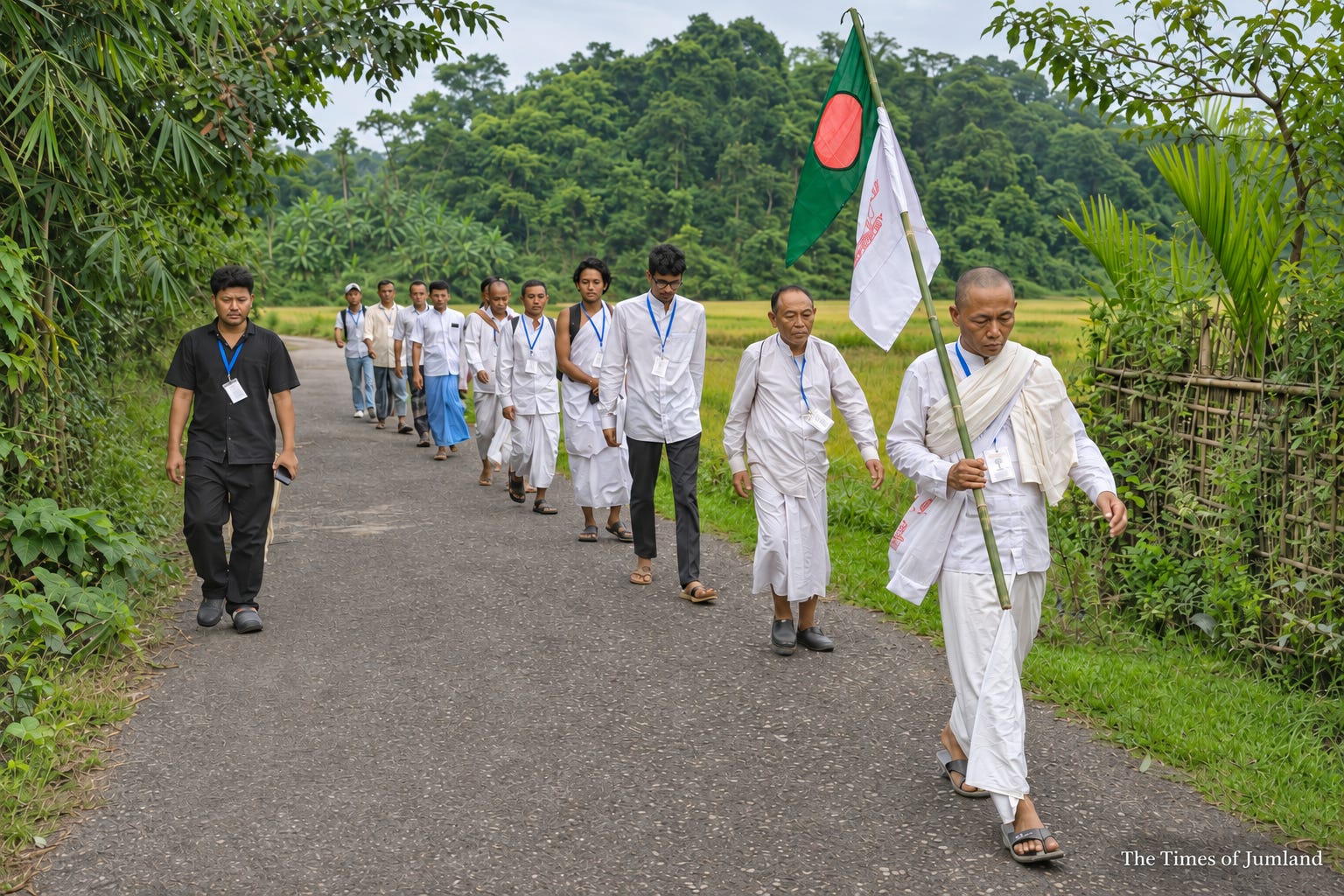
Uthwayngya Marma’s Teknaf to Dhaka walk began on November 19, 2026, with 12 participants seeking support for a residential campus that would provide education, accommodation, food and healthcare for 1,000 disadvantaged children from hill communities.
Named “Walk for Humanity,” the campaign started at 7am from Zero Point in the Aliabad area of Teknaf municipality, Cox’s Bazar. The organisers plan to conclude the 45-day journey at the Prime Minister’s Office in Dhaka.
Uthwayngya, a Marma organiser from Lama upazila in Bandarban, is leading 11 companions. Their journey grew from years of work supporting children in remote areas of the Chittagong Hill Tracts.
His voluntary activities began in 2010. In 2022, he established Rongkhedong Shishu Sadan, a children’s home in Lama, with nine disadvantaged children.
He later established Prennui Shikkhaloy in a remote border area of Alikadam upazila. According to the organisers, the two institutions now provide education and humanitarian assistance to 260 children from seven communities, including Chakma, Marma, Mro, Bawm and Khumi.
That experience led to the larger campus proposal. The target of 1,000 children describes the planned expansion, rather than the number currently receiving assistance.
At the campaign’s launch, Uthwayngya described the barriers facing children from poor hill families. Many parents depend on jhum cultivation and other agricultural work but struggle to meet schooling expenses. Studying away from home brings additional costs for accommodation, meals and daily care.
The proposed campus would bring these needs together. Plans include a school, safe residential accommodation, nutritious meals, healthcare and child-protection arrangements.
The organisers also envisage practical and environment-based learning. Alongside formal education, they want children to retain their own languages, cultures and traditions.
The wider proposal includes accommodation for older people and a meditation and peace centre. These remain planned facilities rather than completed parts of the project.
The walking campaign aims to explain that vision to a wider audience and attract continuing support from people in Bangladesh and abroad.
Participants set out in white clothing, carrying Bangladesh’s national flag and a white campaign flag. Most members were reported to be over 40.
Their planned journey includes visits to Buddhist villages and monasteries in Cox’s Bazar, Chattogram, Noakhali and Feni before reaching Dhaka. These stops form part of their effort to meet communities and build support along the way.
The stated walking target is around 20 kilometres a day. The 45-day programme includes community visits rather than simply following a direct route to the capital.
A central support initiative is “One Sack of Rice—One Child’s Future.” The organisers hope to build a network of 15,000 supporters, each contributing at least one sack of rice annually or an equivalent amount of money towards children’s food and education.
The plan seeks recurring contributions to sustain assistance beyond the walking campaign, connecting a donation people can readily understand with the continuing needs of children in residential care.
The journey has encountered a setback. A November 23 report placed the team in Cox’s Bazar town and said one participant had fallen ill in Ukhiya and suspended his journey there.
That is the latest dated location update established in the reports reviewed for this account. Reaching the Prime Minister’s Office remains the organisers’ stated destination; a meeting with government representatives has not been established in those reports.
The campaign’s background traces a clear progression: voluntary work from 2010, a children’s home beginning with nine children in 2022, a second institution in Alikadam and a reported 260 children now receiving assistance.
Uthwayngya Marma’s Teknaf to Dhaka walk carries the next stage of that ambition. The organisers are seeking broader participation to turn the proposed campus into a place where 1,000 children could receive schooling alongside the food, accommodation and care needed to continue learning.